

Cold is never just one number. A windy walk to the train, a quiet hour in the stands, a weekend trail, and the first few minutes after stepping outside can all feel completely different.
That is why a dependable heated jacket should do more than get hot. It should bring warmth to the areas that matter, stay comfortable as your activity changes, and keep the technology from getting in the way of everyday life.
That is the idea behind Heatvia: thoughtful heating technology built into clothing you will actually want to wear.
1. Warmth Is a System, Not Just a Heating Panel
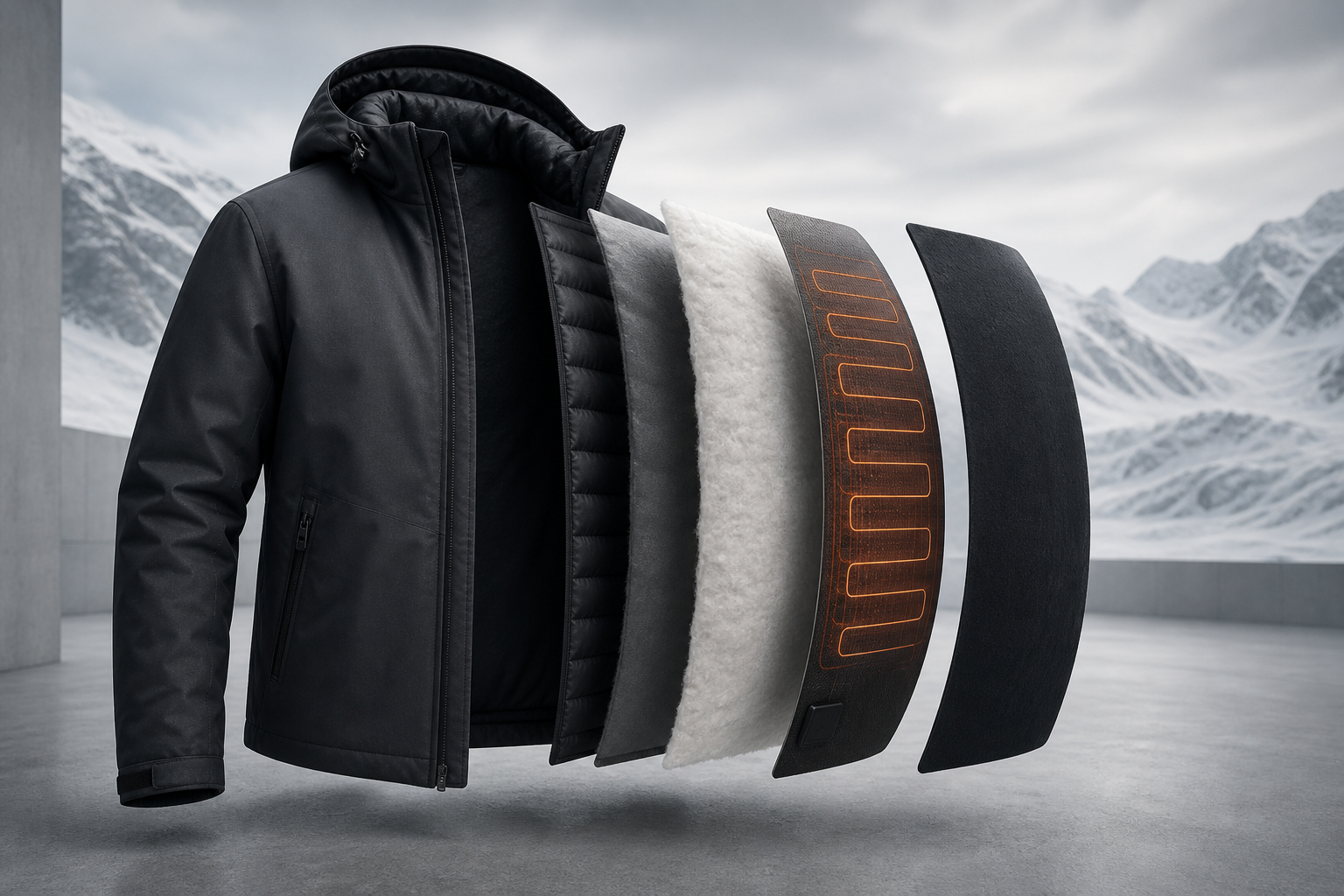
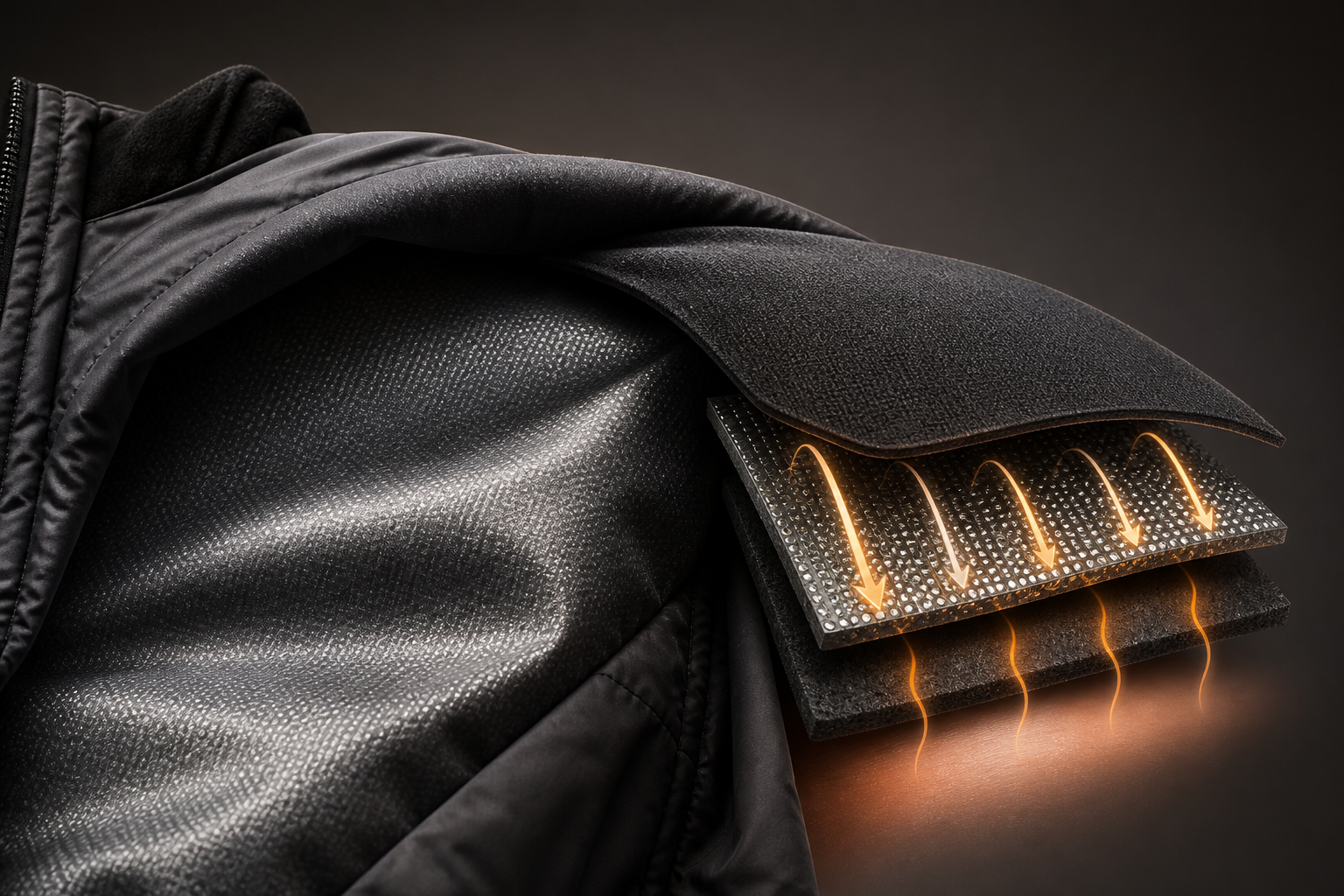
Active heat is only one part of the experience. The outer shell, insulation, heating layer, and interior lining all need to work together.
- The outer shell manages the weather. It helps limit the effect of cold wind and light moisture so warmth is not carried away as quickly.
- Insulation holds still air. A lightweight loft creates a thermal buffer without turning the jacket into a bulky winter coat.
- A flexible heating layer adds warmth on demand. It follows the shape of the garment and moves with the wearer.
- The interior lining supports all‑day comfort. Soft materials and considered construction reduce stiffness and keep the jacket feeling like clothing—not equipment.
Heatvia’s design approach is not about asking one technology to do everything. Each layer has a clear job. The jacket should still provide useful everyday insulation when the power is off, then add active warmth when the temperature or your activity calls for it.
2. Put Warmth Where It Matters
The body does not experience cold evenly. When the core stays cold, hands and feet can feel colder too. But concentrating too much heat in one small spot can be just as uncomfortable.
A better temperature experience depends on three things:
- Core‑focused placement. Heating zones should be planned around the jacket pattern and intended use—not added as an afterthought.
- A smooth warm‑up. Comfort should build steadily instead of arriving as a sudden hot spot.
- Simple adjustment. Commuting, sitting still, and moving outdoors create different needs. Multiple heat settings let the wearer respond without changing the entire outfit.
The goal is not the highest possible temperature. It is even, controlled warmth that remains comfortable over time.
3. Power Is Part of the Wear Experience
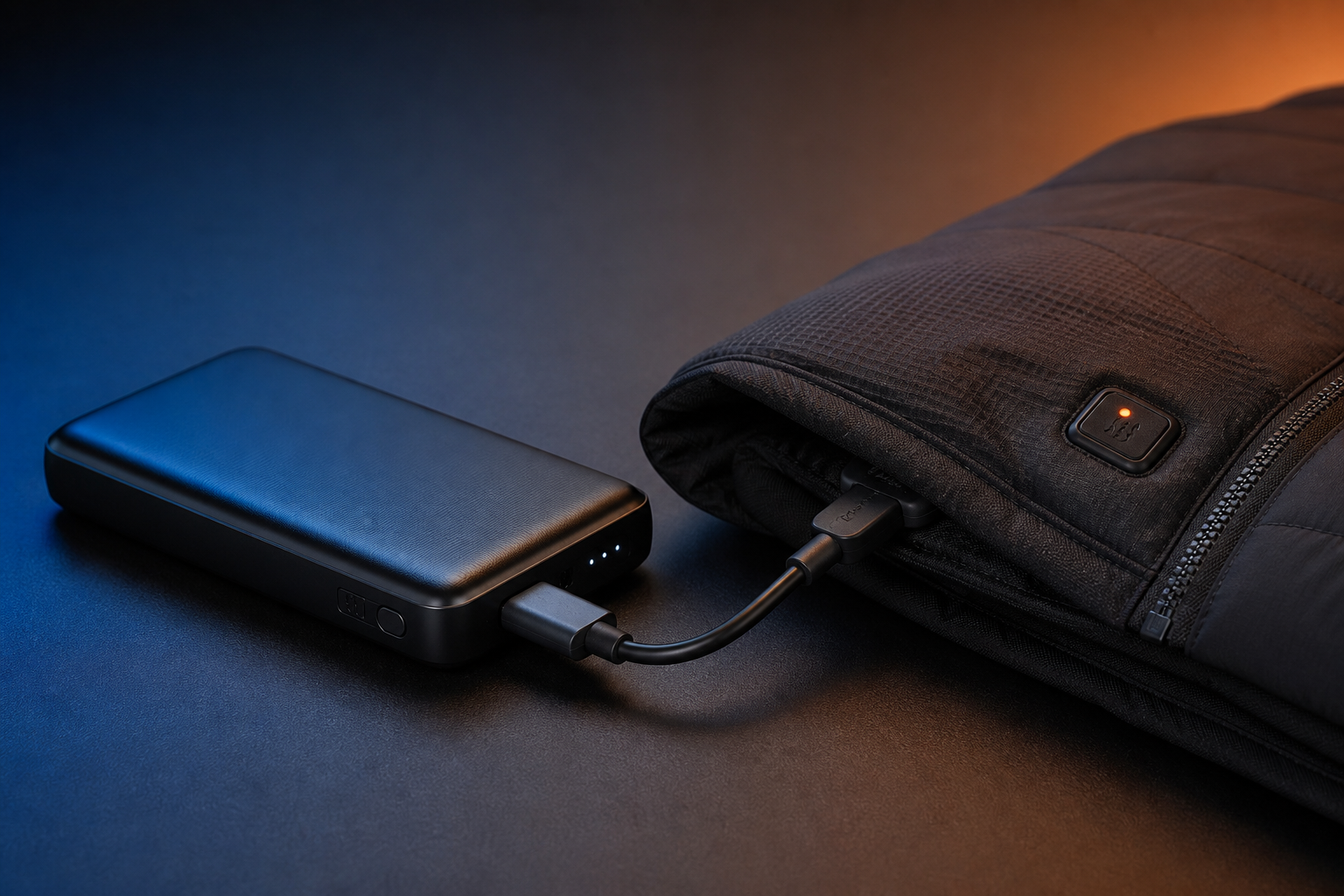
Whether a heated jacket becomes a daily favorite often comes down to details that are easy to overlook: where the battery sits, whether the connector stays secure, whether the controls are easy to find with cold hands, and whether the cable pulls during movement.
Heatvia’s ideal power experience is designed to fade into the background:
- A balanced battery position helps reduce bounce and drag.
- Internal cable routing keeps the connection out of the way.
- Straightforward controls reduce fumbling in cold conditions.
- Adjustable settings help users balance warmth and power use for the day ahead.
Real‑world runtime varies with battery capacity, heat setting, outside temperature, and use conditions. A useful product experience should make those tradeoffs clear so customers can plan with confidence.
4. A Flexible Heating Layer Makes Warmth Feel Even
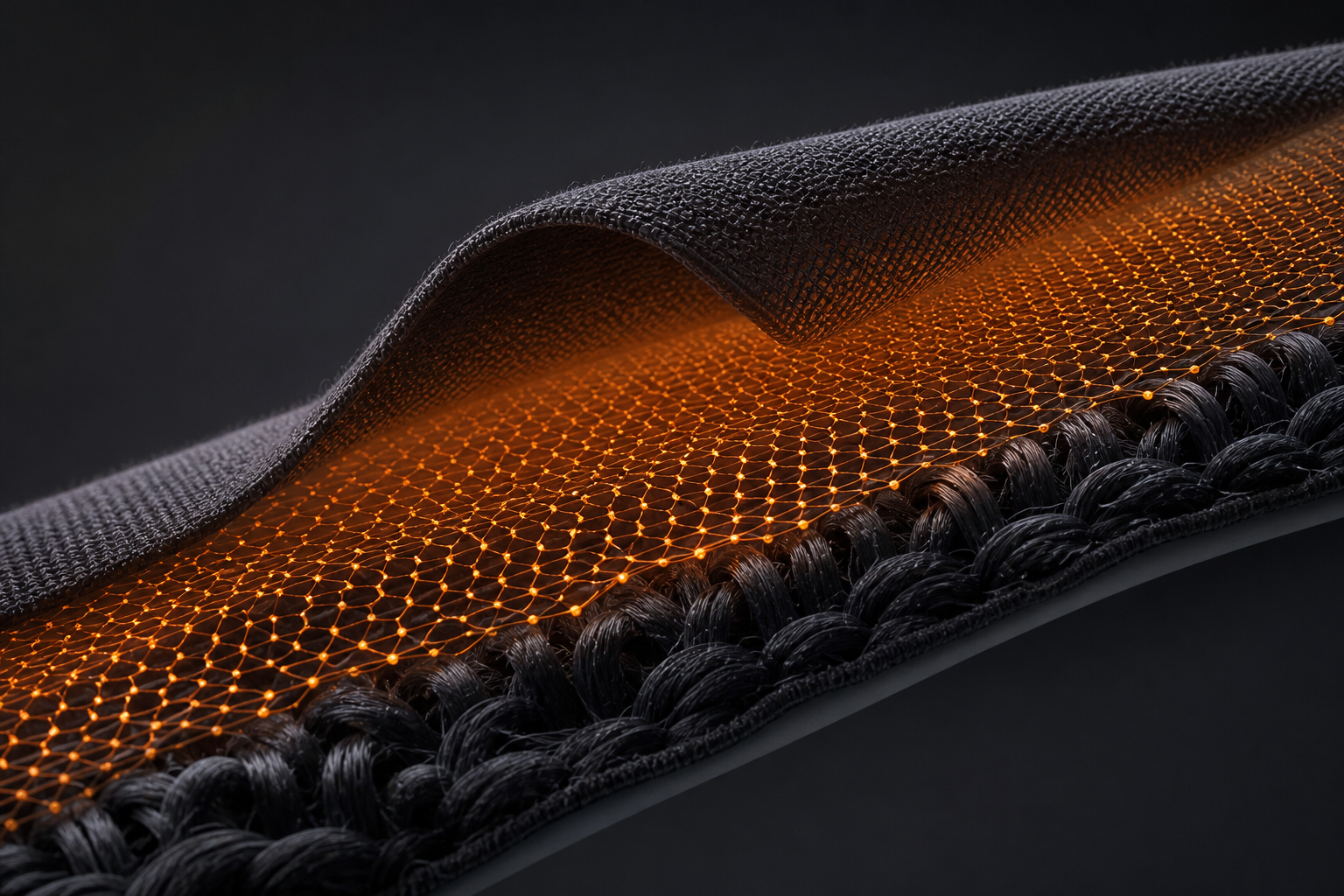
The heating element has to balance two demands: transfer warmth efficiently while remaining thin and flexible enough to bend with fabric and body movement.
When heat moves through a fine, continuous conductive network, the sensation can feel more like warmth spreading across an area than a few isolated hot points. How that layer is integrated into the garment also matters. It should support everyday movement, folding, and the care routine specified for the product.
For Heatvia, the technology should not make the jacket look like a device. The most convincing system is the one hidden inside a clean silhouette: simple on the outside, controlled warmth on the inside.
5. Keeping Warmth In Matters as Much as Creating It
If newly generated heat escapes immediately, more power will not automatically create lasting comfort. The other half of a heated garment’s job is slowing unnecessary heat loss.
Insulation, interior materials, and garment fit can work together to create a more stable microclimate inside the jacket. A heat‑reflective lining approach may also help direct some radiant warmth back toward the wearer, allowing active heating and passive insulation to work as one system.
The benefit is not a jacket that feels hotter all the time. It is more control: turn the setting down when conditions improve or activity increases, then add warmth again when the wind picks up or you stop moving.
6. Why This Matters in Everyday American Winter Life
A single winter day can move through several different conditions:
- The early walk to the car or station, before your body has warmed up.
- A cold commute followed by a heated indoor space.
- Outdoor work, snow clearing, a weekend hike, or time at the sidelines.
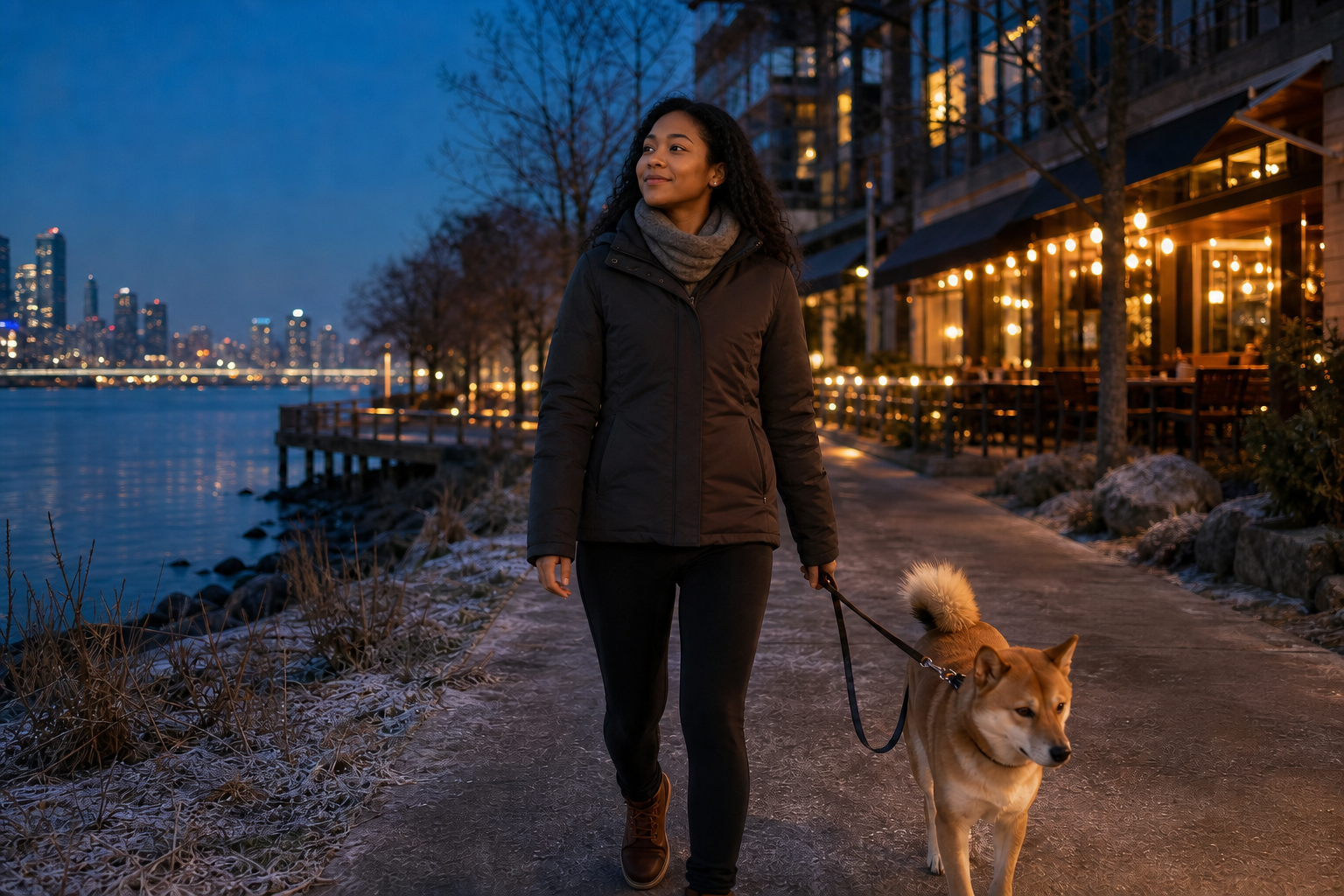
- A night dog walk, stadium seat, or campsite where standing still makes the cold arrive quickly.
A conventional heavy coat gives you two choices: wear it or take it off. Adjustable heat adds more room in between. It is not about turning winter into summer. It is about spending less attention on the cold and more on what you came outside to do.
7. Reliable Warmth Also Depends on Proper Care
Heated apparel combines clothing with powered components. Always follow the instructions provided with the specific product:
- Turn the system off and remove the battery before washing.
- Follow the care label and avoid harsh twisting or damage around connection points.
- Allow the garment to dry completely before reconnecting power.
- Use only the specified power source and connection method.
- Stop using the product and contact support if a cable, connector, or heating area appears damaged or behaves abnormally.